Complete guide to Hindu wedding invitation cards — Shubh Vivah, Ganesh motif, muhurat, parents' names, multi-event schedule, and auspicious colours for Indian families.
Author
Traditional Wedding Consultant
Published
23 June 2026
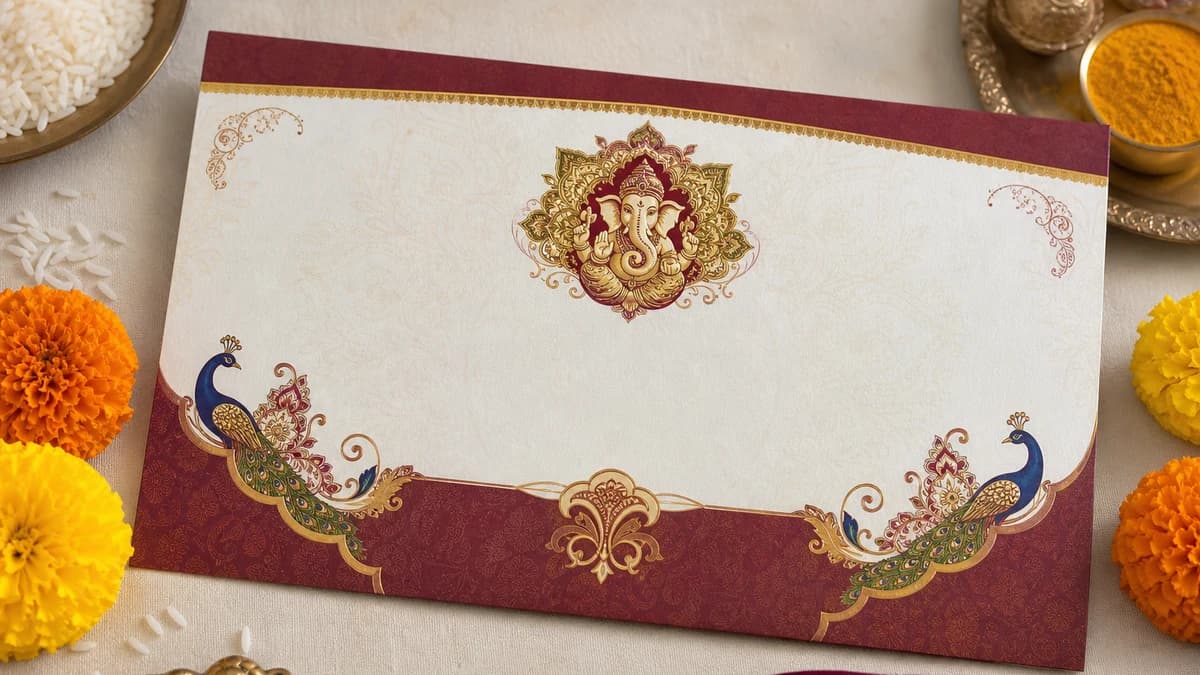
A Hindu marriage invitation card is more than event information — it carries blessings, family lineage, and sacred timing (muhurat). Elders often review wording, symbols, and colour before a single WhatsApp forward goes out.
North and South Indian weddings often list haldi, mehendi, sangeet, wedding, and reception. Use a table or stacked sections. Browse marriage card templates structured for multi-day events.
| Element | Traditional Meaning |
|---|---|
| Maroon & Gold | Prosperity, celebration, classic North Indian weddings |
| Peacock & Lotus | Beauty, grace, common in royal and South Indian themes |
| Mandala / Temple arch | Sacred space framing the couple's names |
Marathi families may prefer Lagnapatrika phrasing; Gujarati kankotri includes specific blessing lines; Hindi belts often use Shadi card bilingual text. Choose templates that support your script and edit all lines in the online wedding card maker.
Topics Covered