
Horoscope matching (Kundli Milan) is key in traditional Hindu marriages. Discover the meaning of Rashi, Nakshatra, Gothra, and how to list them correctly in your biodata.
Author
Pandit Shastri / Astrology Advisor
Published
2 May 2026
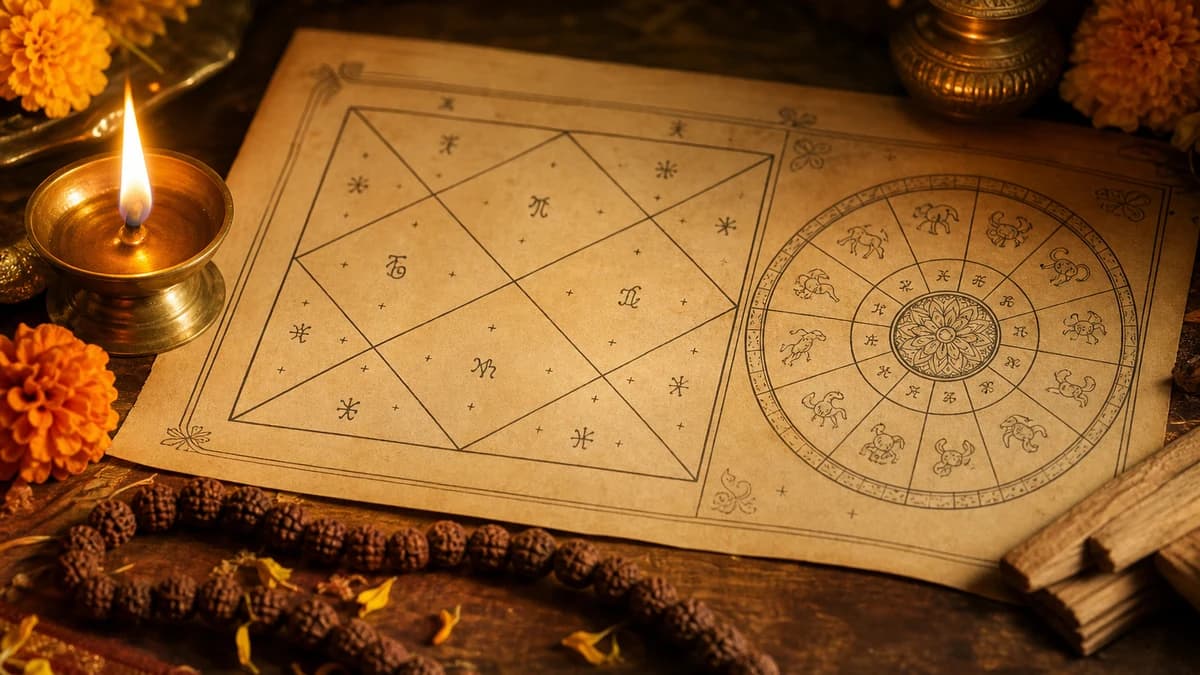
For centuries, Hindu matrimonial traditions have relied on horoscope matching (Kundli Milan) to evaluate compatibility between a prospective bride and groom. While modern profiles emphasize education and career, incorporating your astrological details (like Rashi, Nakshatra, and Gothra) is highly respected and crucial for traditional family vetting.
Your Rashi (zodiac sign) represents the position of the Moon at the exact moment of your birth, governing your emotional temperament and personality. The Nakshatra (lunar mansion) breaks this down further into 27 unique divisions, determining your deeper behavioral traits, values, and life cycles (Dashas).
In Hindu culture, Gothra refers to your paternal lineage traced back to ancient sages. Traditionally, marriages within the same Gothra (Sagotra) are restricted to prevent close genetic overlaps. In addition, listing your Kul or family ancestry helps establish clan heritage and societal alignment.
A common astrological parameter is the presence of Manglik Dosha (caused by the alignment of Mars). It is highly helpful to state your Manglik status clearly in your biodata:
| Manglik Status | Description & Compatibility |
|---|---|
| Non-Manglik | Standard status, ideal compatibility with all non-Manglik individuals. |
| Manglik (Purna) | Mars sits in houses 1, 4, 7, 8, or 12. Ideal compatibility is strictly with other Mangliks. |
| Anshik / Partial | Mild Mars influence, often fades by age 28. Compatible with most matches after simple rituals. |
During Kundli Milan, astrologers evaluate 36 aspects (Gunas). Two major pillars of this matching process are:
Avoid cluttered tables. Create a clean, dedicated column titled "Astrological Credentials" and present the facts in a neat bulleted list:
This clean presentation satisfies traditional parents while maintaining a high-fidelity modern aesthetic.
Topics Covered